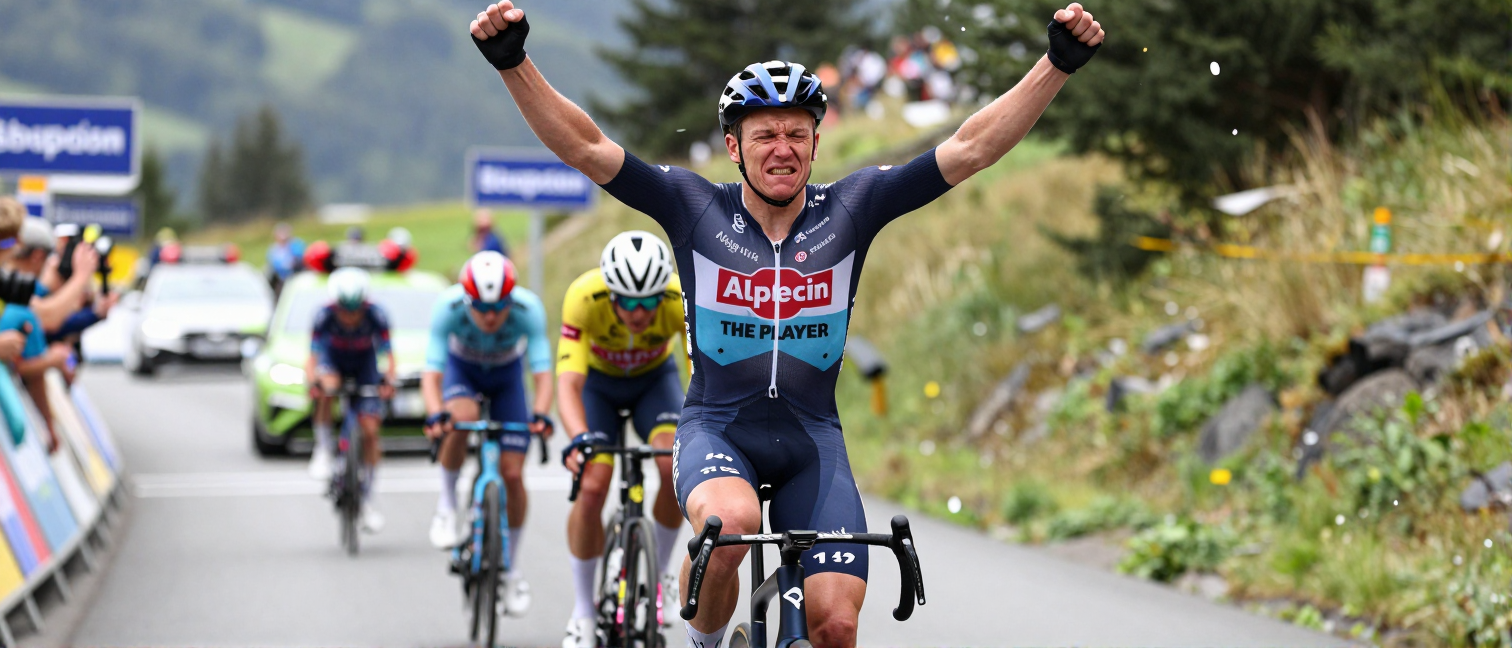
Jasper Philipsen was denied a win on 5 July 2026 when Alpecin‑Deceuninck’s traditional lead‑out train broke down in the final meters of the classic, leaving him to finish second behind the surprise victor.
What happened?
The race unfolded in the rolling hills of the Flemish Ardennes, with the sprint finish set up for the Alpecin‑Deceuninck squad. Their designated lead‑out rider, Tim Merlier, launched at 200 metres to go, but a sudden slowdown caused the train to bunch. Philips Philipsen, positioned on the wheel of Merlier, found himself boxed in by a rival’s wheel and was forced to swerve. The chaos allowed Mads Pedersen to surge ahead and cross the line first, while Philipsen took the runner‑up spot.
Why it matters for Jasper Philipsen
Philipsen entered the day as the pre‑race favorite, having claimed three sprint victories earlier in the season. A win would have marked his fifth classic triumph and solidified his claim as the team’s primary sprinter for the upcoming WorldTour calendar. The failed lead‑out not only cost him points in the UCI ranking but also raised doubts about Alpecin‑Deceuninck’s ability to protect their star in high‑pressure finishes. Team director Johan Boonen admitted the execution was “not up to our standards,” hinting at possible changes to the sprint train.
How the team responded
After the race, Boonen called a tactical meeting. Sources close to the squad say they are considering rotating the lead‑out duties among Luca Micheletti and Nils Politt to avoid a repeat of today’s mishap. The team also plans to run a simulated sprint in training this week, focusing on timing and positioning. Philipsen, however, remained upbeat, stating that “the bike is still fast, and we’ll sort the train out.” His confidence suggests he will still be a threat in the next classic.
What comes next?
The next major test for Philipsen will be the Tour of Flanders on 12 April 2027, where a well‑orchestrated lead‑out could finally deliver the win he craves. Meanwhile, Alpecin‑Deceuninck will likely fine‑tune their sprint strategy before the Paris‑Roubaix later in the month. Fans will be watching closely to see if the new lineup can restore the team’s reputation for delivering sprint victories.
How this affects the UCI standings
Philipsen’s second‑place finish awarded him 30 UCI points, keeping him within the top five of the sprint ranking but narrowing the gap to leader Mark Cavendish, who placed third. The points swing could influence team selections for the upcoming World Championships, where national squads will prioritize riders with recent podiums.
The broader sprint landscape
Philipsen’s setback underscores the fragile nature of sprint finishes in modern road racing. Even a well‑drilled lead‑out can unravel with a single misstep, giving opportunistic rivals a chance to capitalize. As teams invest more in data‑driven tactics, the pressure to execute flawlessly grows, and any flaw can shift the outcome dramatically.